In Praise of the Handmade Clarinet Reed
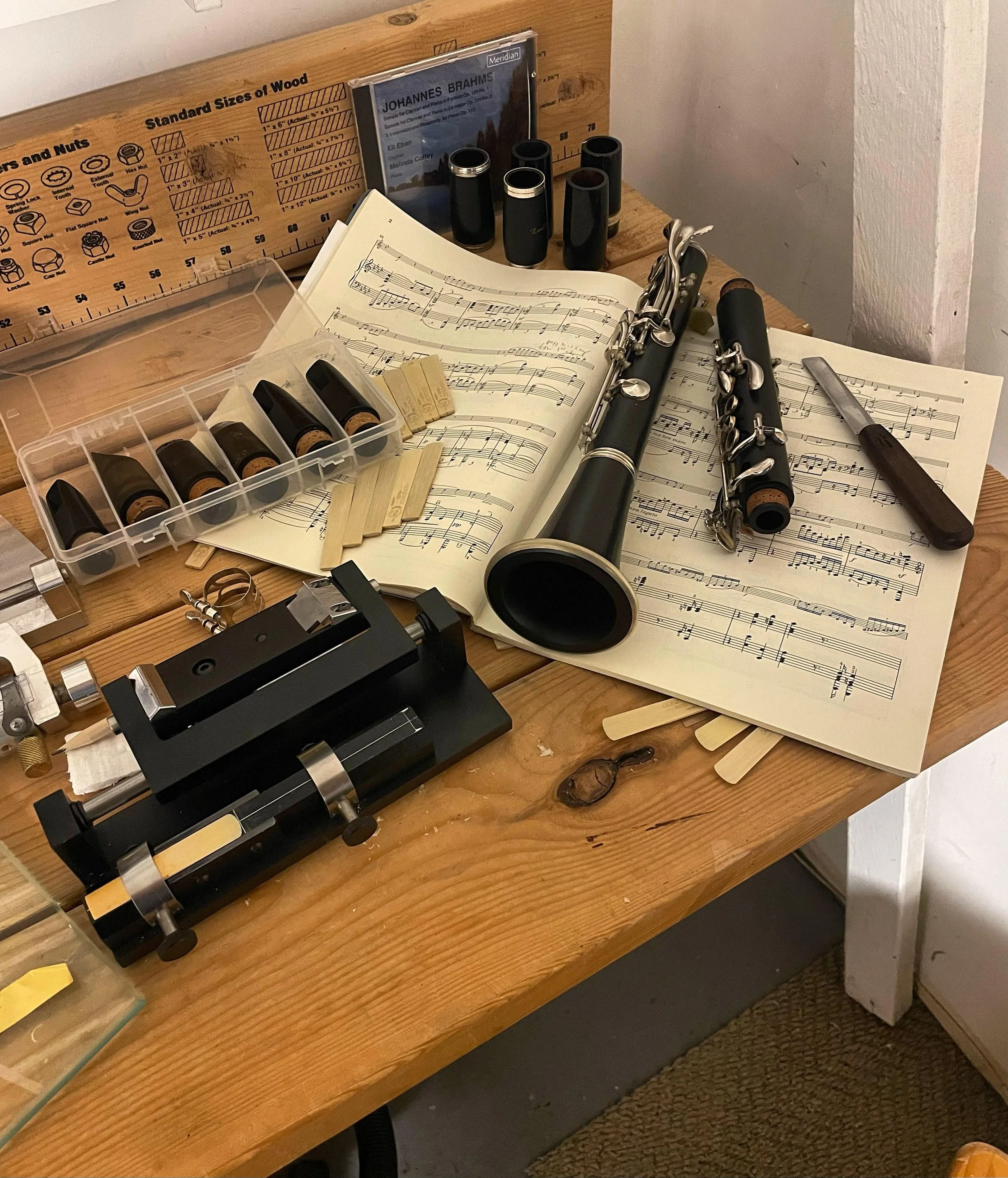
Let’s set the scene - it’s five minutes before a concert, and you’ve got a big solo on the program. Frantically, you search through your reed case to find the perfect reed (spoiler alert - it doesn’t exist).
The first reed you try sounds fuzzy.
The second one has a tone that would make a chainsaw sound beautiful.
And the third is warped beyond hope.
Your anxiety shoots through the roof - why do none of these play? All that money spent on boxes and boxes of reeds just to have all of them fail you in your moment of need. There has got to be a better way, right?
Why do Commercial Reeds Fail Us?
In order to understand why making your own reeds is worth it, you have to understand why commercial reeds so often fail us:
Commercial reeds are mass produced in a way that does not take into account your unique playing style.
Making your own reeds gives you control over the type of cane you use, allows you to properly cure your reed blanks to minimize (if not completely eliminate) warping, and carefully work each reed to match your mouthpiece and playing style.
In this post, we’ll explore the key benefits of crafting your own clarinet reeds, why it’s worth the learning curve, and how it can elevate your performance and musicianship.
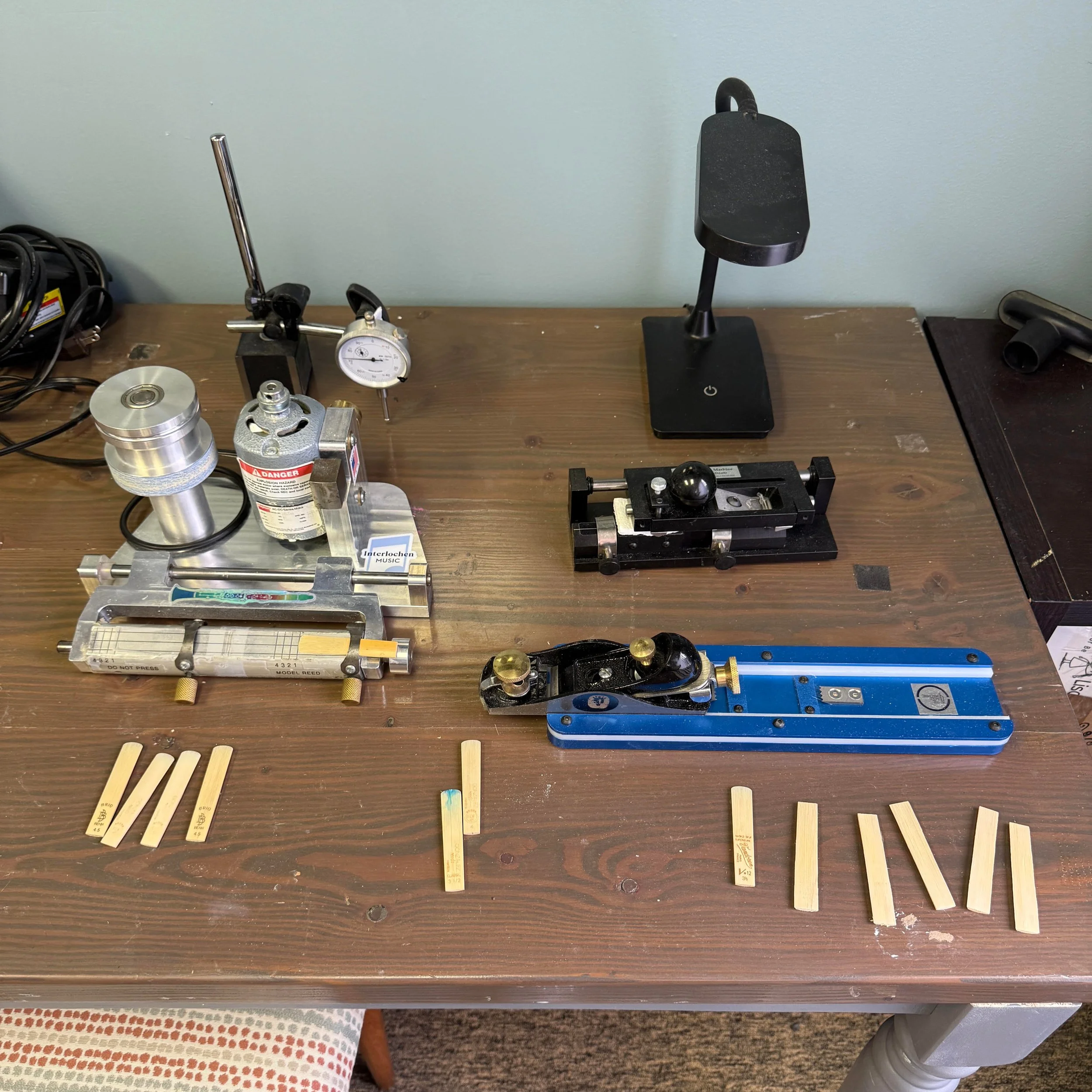
My (mostly) organized and “clean” reed desk 😬
What Does “Making Your Own Reeds” Mean?
Hand-making reeds isn’t just about cutting cane from scratch — it means shaping, adjusting, and curing each reed to suit your instrument, mouthpiece, and playing style. Unlike commercial reeds, which are machine-cut en masse, handmade reeds allow a player to refine subtle features like vamp shape, tip thickness, and balance to achieve their ideal resistance and response.
Tailor Your Reed to Your Sound
One of the biggest advantages of making your own reeds is control over tonal results:
You can customize thickness and taper to match your mouthpiece and preferred sound.
You don’t have to bite to get the reed to respond, helping avoid sharpness and unnecessary embouchure fatigue.
You’re not limited to factory dimensions — each reed can be shaped to your musical needs.
This means you’re not chasing consistency from one store-bought reed to the next — you create it yourself.
Learn How Reeds Really Work
Making reeds teaches you about the physics of your instrument:
You’ll understand how cane fibers interact with air, vibration, and your embouchure.
The hands-on process builds your ability to adjust reeds you’ve bought — a skill many players never develop.
This deeper reed literacy pays off: you’ll become better at diagnosing reed issues and making minute tweaks that improve playability and tone.
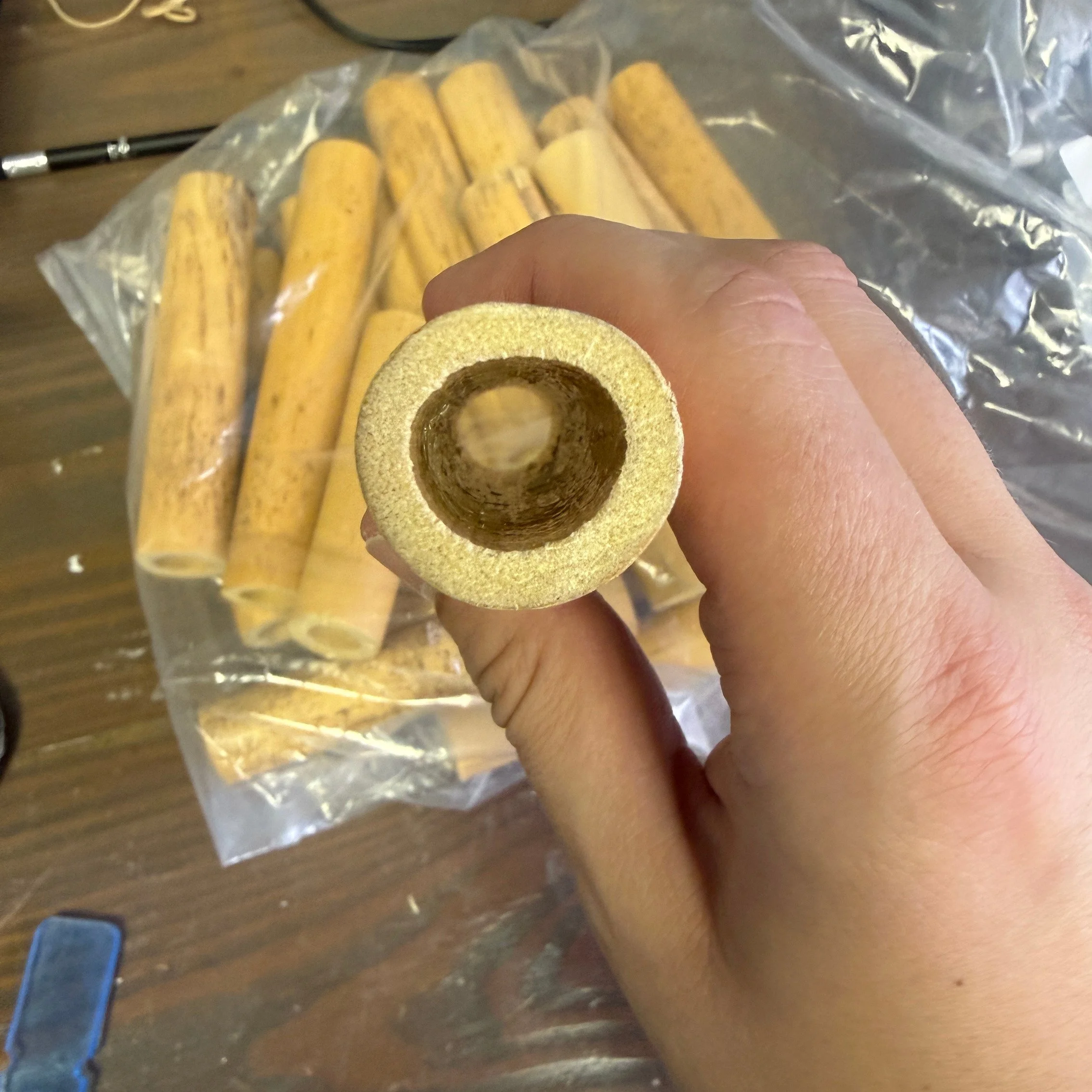
A promising tube of cane! Look the nice, even fibers.
Greater Stability & Longevity
Handmade reeds can be more stable and durable than many commercial alternatives:
Proper curing and sanding can reduce uneven drying and warping.
The cane fibers become compressed and better stabilized, making the reed less sensitive to humidity and climate changes.
Many players find that handmade reeds last longer and maintain their performance over time.
While commercial reeds are convenient, they’re often more reactive to environmental swings — something serious players know can affect auditions, rehearsals, and performances.
Potential Long-Term Cost Savings
Initially, making reeds by hand requires investment in tools (knife, sandpaper, file, micrometer), quality cane, and practice. But over time:
You spend less on reeds that don’t work for you.
You’ll refine shapes and designs that work for your playing, reducing trial-and-error purchases.
You’ll gain the ability to revive or adjust reeds instead of throwing them away.
Many clarinetists find the cost per reed becomes far lower when they can craft and adjust reeds tailored to their needs.
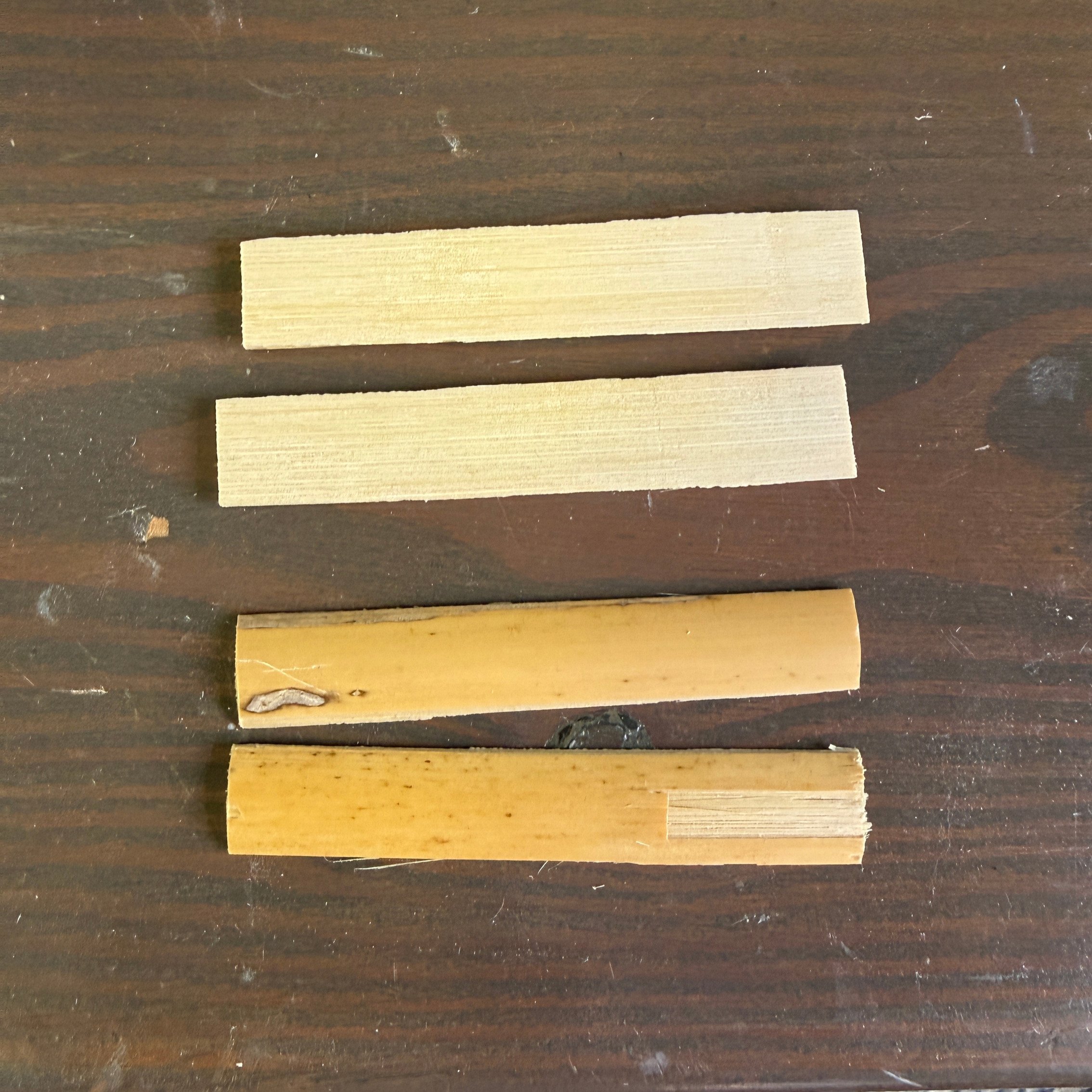
Blanks awaiting final sanding after being cured.
A Deeper Musical Connection
There’s a satisfaction and artistic connection that comes from creating something you perform with:
Making reeds by hand encourages patience, focused listening, and greater awareness of your instrument — qualities that translate into better playing overall.
It’s similar to how a painter mixes their own colors — you start understanding tone not just as sound, but as craft.
Tips for Beginners
If you’re new to reed making:
Start with quality cane blanks — not all cane is created equal.
Take your time learning the curing and balancing process; it’s as much science as art.
Play-test your reed frequently during the process to tailor adjustments.
You don’t have to master every technique on day one — even basic experimenting can improve your approach to reeds both store-bought and handmade.
Recommended Resources
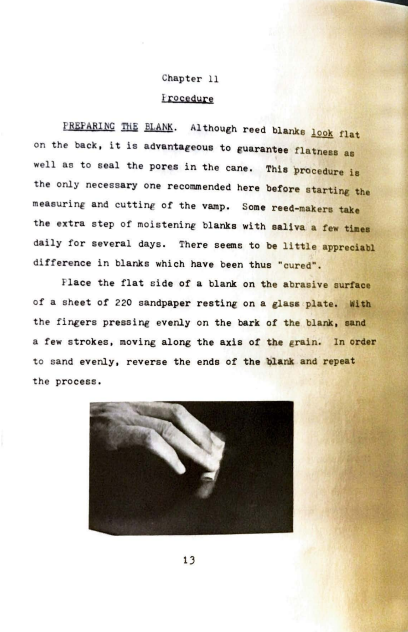
Making and Adjusting Clarinet Reeds by Glen H. Bowen
This book takes you through every single step of reed making with only a few simple tools required. I learned a lot following his method, but ultimately decided that investing in a reed profiler like the ReedDual from Precision Reed Products would give me more consistent and easy results. It was a game changer for sure!
Unfortunately, this book seems to be out of print, but many university libraries have a copy.
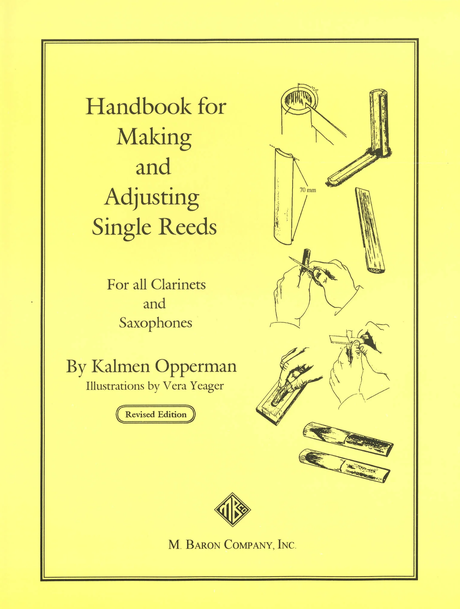
Handbook for Making and Adjusting Single Reeds by Kal Opperman
Like the Bowen book above, this is another fantastic “nuts to bolts” resource. It also contains many useful tips for adjusting reeds that can be applied to commercially produced ones.
Unlike the Bowen, this book is still in print and can be purchased from CAMCO.
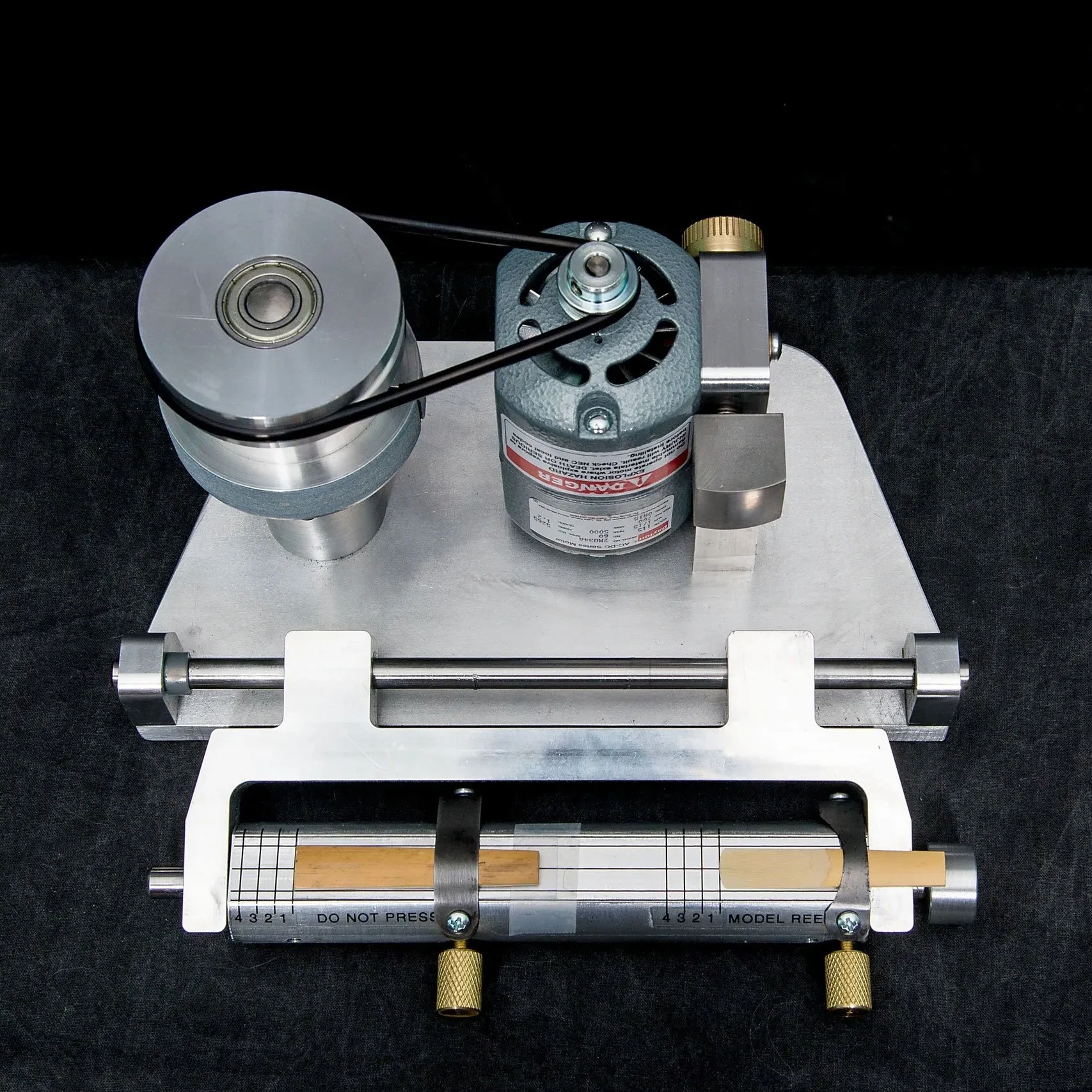
The Reedual by Precision Reed Products
The gold standard for profiling your own reeds. All you need is a good reed and some blanks to produce virtually perfect copies of your good reed over and over again.
This is the most expensive tool you’ll need, but worth every penny. Take good care of it and it will last a lifetime!
Final Thoughts
Hand-making clarinet reeds isn’t for everyone — it requires patience and practice — but for clarinetists who care about tone, response, and musical control, it’s a rewarding path. Whether you’re a student looking to understand your gear more deeply or a professional seeking consistency and personalization, reed making opens a door into craftsmanship that directly influences your sound.
Questions about reed making? Get in touch.